
I think one of the loneliest things in the world is being deeply depressed while still being highly functional.
Because from the outside, it can look like you’re doing okay.
You’re still getting up.
Still working.
Still replying.
Still showing up.
Still taking care of people.
Still doing what needs to be done.
And yet, inside, you feel like you are carrying something unbearably heavy.
That has been 2025 and 2026 for me.
The hardest years of my life.
Not in the kind of way that announces itself loudly.
Not in the kind of way that makes everything stop.
But in the quiet kind.
The kind that settles into your bones.
The kind that follows you into every room.
The kind that sits beside you in the car, lingers in the shower, and grows louder in the middle of the night when everyone else is asleep and the house is finally still.
The kind of sadness that doesn’t always have language for itself at first.
Just heaviness.
Just exhaustion.
Just this constant feeling that no matter how much you carry, produce, fix, or push through… it is still somehow too much.
And maybe that’s part of what makes it so lonely.
Because from the outside, my life looks full.
Full of work.
Full of responsibility.
Full of purpose.
Full of people who need me.
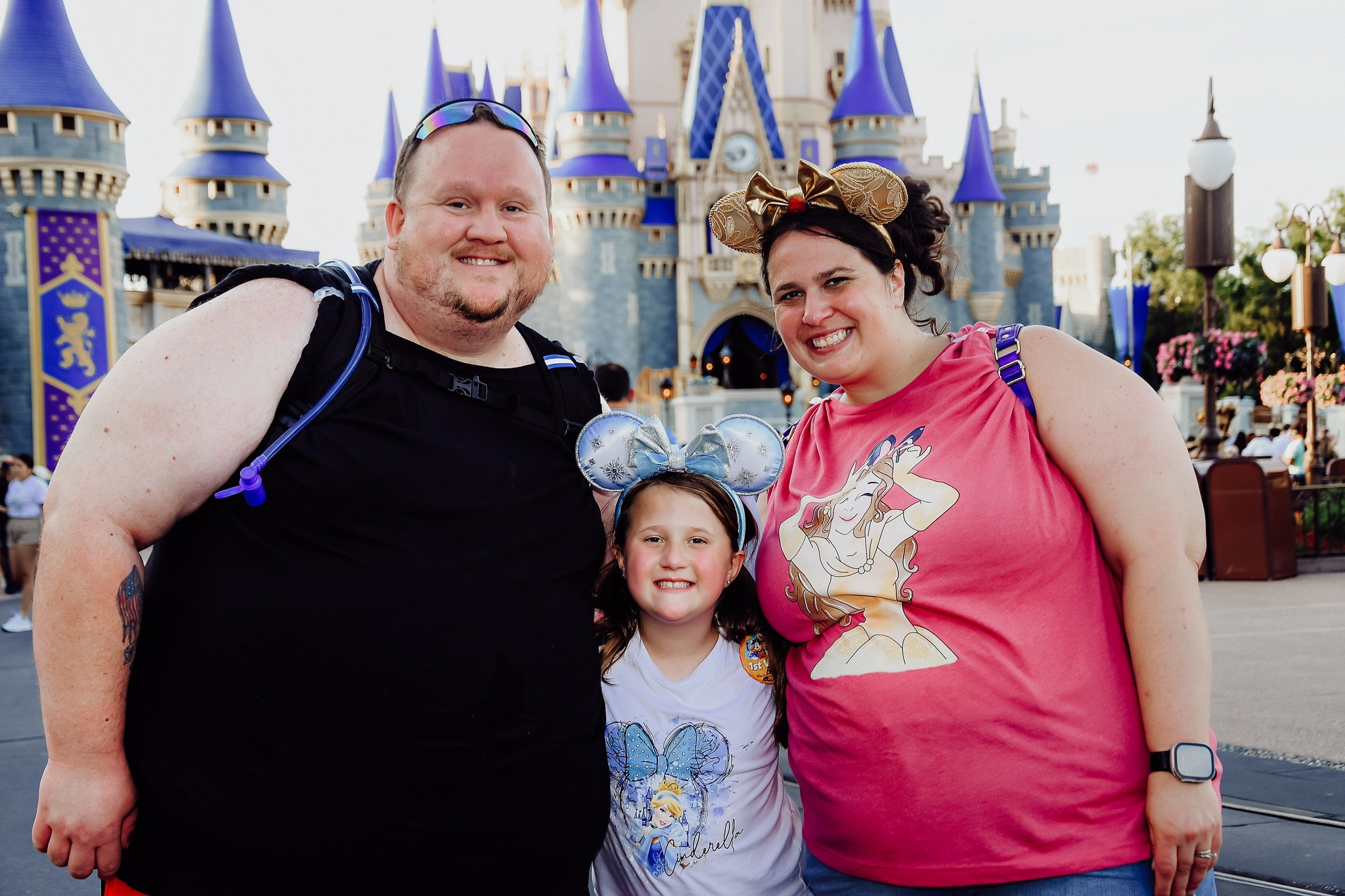
I’m a full-time photographer.
A full-time marketing specialist.
A mom.
A wife.
A basketball coach.
A softball coach.
A person trying to hold everything together while also trying not to completely lose herself in the process.
And there are so many days where I do what needs to be done.
That’s what people don’t always understand about depression.
It doesn’t always look like falling apart in obvious ways.
Sometimes it looks like functioning so well that nobody realizes how badly you’re hurting.
Sometimes it looks like waking up before the sun because your responsibilities do not care how heavy your heart feels.
Sometimes it looks like editing someone’s beautiful memories while quietly feeling disconnected from your own life.
Sometimes it looks like answering emails, writing campaigns, showing up to work, coaching kids, taking care of what needs to be taken care of, and still feeling like internally you are hanging on by threads no one else can see.
Sometimes it looks like loads of laundry that never seem to end.
A house that feels like a disaster no matter how many times you try to catch up.
Rooms that feel reflective of your mental state—overwhelming, cluttered, impossible to fully settle.
Not because you don’t care.
Not because you aren’t trying.
But because when your mind and heart are already carrying so much, even ordinary things start to feel impossibly heavy.
And then comes the guilt.
The guilt of walking past the mess and not knowing where to start.
The guilt of feeling behind in your own home.
The guilt of being physically present, but emotionally so exhausted that you feel like only part of you is there.
And layered underneath all of that has been grief.
So much grief.
The kind that changes the texture of your life.
I have been deeply missing my mom.
Deeply missing my grandparents.
Deeply missing my closest uncle.
And deeply grieving the baby we miscarried.
Some losses are loud.
Some losses split your life into a clear before and after.
And some losses live more quietly in the body.
They show up unexpectedly.
In holidays.
In certain songs.
In memories that rise out of nowhere.
In the moments you wish you could call someone.
In the ache of knowing there are people you love so deeply who are no longer here to hug, to talk to, to lean on, to be known by in the same way.
And miscarriage carries its own kind of heartbreak.
A grief that can feel both deeply personal and strangely invisible.
A grief for a life that mattered.
A grief for what could have been.
A grief that lives in the body, in the heart, in the future you briefly started imagining before it was taken from you.
There are losses people know how to respond to, and then there are losses that often get met with silence, awkwardness, or words that never quite touch the depth of what was actually lost.
But grief is grief.
And grief does not disappear just because life keeps moving.
It comes with you.
Into work.
Into motherhood.
Into marriage.
Into routines.
Into responsibilities.
Into the quiet moments when you finally stop moving long enough to feel what’s still there.
And then there is infertility.
Another grief people often do not fully understand unless they’ve lived it.
Because infertility is not just about wanting something and waiting.
It is longing.
It is heartbreak.
It is disappointment that repeats itself.
It is trying to stay hopeful without falling apart.
It is watching your body become a source of questions, frustration, grief, and confusion.
It is carrying pain that often has no ceremony, no acknowledgment, no visible proof for the outside world to gather around.
You are just expected to keep going.
And that has been the theme of these years in so many ways.
Just keep going.
Keep working.
Keep producing.
Keep showing up.
Keep being dependable.
Keep being needed.
Keep being capable.
Keep smiling.
Keep functioning.
Keep pretending maybe it isn’t all as heavy as it feels.
But when you live like that long enough, you begin to disappear a little.
That is the part I don’t think enough people talk about.
How easy it is to become the strong one.
The reliable one.
The productive one.
The one who manages it all.
And how quietly devastating it can be when you are drowning inside that version of yourself.
Because the world often praises functionality.
It praises the people who keep going.
The people who perform strength well.
The people who carry enormous weight without letting it spill.
But functioning is not the same thing as being okay.
Being productive is not the same thing as being whole.
And surviving is not the same thing as living lightly.
There have been days where I have felt completely alone in my own life.
Days where I have been surrounded by people and still felt unseen.
Days where I have looked around at all the good in my life and still felt crushed by sadness, which somehow brought even more guilt with it.
Because when you are depressed, even gratitude can feel complicated.
You can know you are blessed and still be hurting deeply.
You can love your life and still feel overwhelmed by it.
You can love your family and still feel unbelievably alone.
You can be needed by many people and still ache for the people you miss most.
And when you are used to being the one who handles things, who figures things out, who keeps moving, who stays steady—admitting that you are not okay can feel almost impossible.
But maybe that is why I am writing this.
Because I know I am not the only one.
I know there are women carrying invisible grief every day.
Women who are deeply overwhelmed but still dependable.
Women who are sad but still productive.
Women who are lonely in full houses.
Women who are functioning so well that nobody realizes how close they feel to unraveling.
And maybe some of them need someone to say it first.
So here it is:
I have been struggling.
Deeply.
Not in a passing way.
Not in a “just a hard week” kind of way.
In a way that has changed me.
In a way that has made ordinary things feel heavier.
In a way that has made me question how much one person can carry before something in them starts to crack.
I wish I could say I’m writing this from the other side of it.
That I have healed it all.
That I have figured out the rhythm.
That I have found the neat lesson at the end of the hard season.
But that wouldn’t be true.
The truth is, I’m still in it.
Still learning how to survive this version of life without abandoning myself in the process.
Still learning that rest is not laziness.
Still learning that asking for help is not weakness.
Still learning that grief doesn’t need permission to be valid.
Still learning that I cannot continue pouring endlessly from a place that feels empty and expect myself not to collapse.
Still learning how to be honest.
Because honesty is uncomfortable.
But honesty is also holy in its own way.
It strips away performance.
It makes room for what is real.
It lets pain be seen without requiring it to be cleaned up first.
And maybe that is what this is.
Not a breakthrough.
Not a perfectly hopeful ending.
Not a polished story about resilience.
Just the truth.
That this has been hard.
That this is still hard.
And that I am doing my best.
And maybe for people like me—for people who are used to carrying, fixing, helping, producing, leading, and pushing through—telling the truth is its own kind of bravery.
So if you’re reading this and any part of it feels familiar…
If you have been carrying more than people know…
If your life looks full on the outside but feels unbearably heavy underneath…
If you have been functioning in survival mode for so long that you barely recognize yourself anymore…
I want you to know this:
You are not weak because this is hard.
You are not failing because you are tired.
You are not broken because you are struggling.
You are not alone because your pain is invisible.
You are human.
And some seasons of life are incredibly, brutally heavy.
Sometimes strength does not look like smiling through it.
Sometimes strength does not look like pushing harder.
Sometimes strength looks like telling the truth.
Sometimes strength looks like surviving.
Sometimes strength looks like admitting that you are deeply hurting while still doing everything you can to keep going.
This is me telling the truth.
Not because I have a beautiful answer.
Not because I have mastered any of it.
Not because I’m trying to make pain sound pretty.
But because maybe someone else needs to know they are not the only one quietly breaking while still being expected to function.
Maybe someone else needs language for the heaviness they have been carrying in silence.
Maybe someone else needs to know that being honest about pain does not make you dramatic.
It makes you real.
And maybe, just maybe, real is where healing begins.

0 Comments